
S Pass vs Employment Pass (EP) in Singapore: Pros, Cons & Eligibility
 Medically reviewed by Dr. Qiao Yufei, MD · MBBS · Last reviewed 6 July 2026
6 min read
Medically reviewed by Dr. Qiao Yufei, MD · MBBS · Last reviewed 6 July 2026
6 min read
Choosing the right work pass is an essential step for professionals planning to build a career in Singapore. Two of the most common options are the S Pass and the Employment Pass (EP), each suited to different salary levels, qualifications, and job roles. Understanding the key differences helps both candidates and employers decide which is most appropriate – and prepares you for what comes next, including the statutory medical examination.
For the end-to-end overview, see our Work Permit application guide.
Before either pass is issued, a medical examination is typically required. Learn about the S Pass medical check-up at Mediway Medical Centre.
What is the Singapore Employment Pass (EP)?
The Employment Pass is designed for foreign managers, executives, and specialised professionals. It targets senior-level roles across most industries in Singapore.

Eligibility Highlights
Qualifying Salary
Candidates must earn at least $5,600 a month, scaling progressively with age from age 23 to around $10,700 for those in their 40s. For the Financial Services sector, the minimum starts at $6,200. Thresholds are reviewed periodically – visit mom.gov.sg for the latest figures.
The COMPASS Framework
COMPASS (Complementarity Assessment Framework) is a points-based system all EP applicants must pass. It evaluates four criteria:
- Salary – How does your pay compare to local peers in your sector?
- Qualifications – Do you hold a degree from a recognised institution?
- Diversity – Does your nationality improve the diversity of your firm?
- Support for Local Employment – Does your company hire sufficient local staff?
Educational Requirements
A degree from a recognised university is the standard pathway. However, COMPASS allows candidates without a degree to qualify if they score strongly elsewhere – for example, through a high salary or skills listed on the Shortage Occupation List.
The Pros of the EP
- No quota limits – employers can hire any qualifying candidate, regardless of existing headcount ratios
- No monthly levy – no additional government levy is payable for EP holders
- Pathway to Permanent Residency – the EP is generally considered a strong route towards PR
The Cons of the EP
- High salary floor – the minimum threshold can be challenging for startups and smaller businesses
- Strict qualification verification – MOM requires third-party authentication of diplomas and degrees, which can extend processing timelines
What is the Singapore S Pass?
The S Pass is designed for mid-level skilled workers – including technicians, associate professionals, and specialised trade staff.

Eligibility Highlights
Qualifying Salary
The minimum qualifying salary is $3,300 (or $3,800 for the Financial Services sector), scaling upward with age. Visit mom.gov.sg for the current age-based salary matrix.
Educational Requirements
S Pass candidates typically hold a degree, diploma, or technical certificate from at least one year of full-time study. This makes it a practical option for skilled workers with vocational or technical qualifications.
The Pros of the S Pass
- Accessibility – opens doors for mid-level talent who are essential to business operations but do not command senior salaries
- Flexible qualification recognition – technical diplomas and trade certifications are accepted
The Cons of the S Pass
- Quota (Dependency Ratio Ceiling) – companies can only employ a set percentage of their workforce on S Passes (typically 10% in the services sector). If that cap is reached, no additional S Pass holders can be hired regardless of the candidate’s qualifications.
- Monthly Foreign Worker Levy – employers must pay a government levy for each S Pass holder. Current rates are set and reviewed by MOM – visit mom.gov.sg for the latest levy amounts.
Head-to-Head Comparison: EP vs S Pass
| Feature | Employment Pass (EP) | S Pass |
|---|---|---|
| Target workers | Senior executives, managers, specialists | Mid-level skilled staff, technicians |
| Minimum salary | $5,600 (Financial Services: $6,200)* | $3,300 (Financial Services: $3,800)* |
| Points system | Yes (COMPASS) | No (age/salary benchmarks) |
| Quota limits | None | Yes (Dependency Ratio Ceiling applies) |
| Employer levy | No | Yes |
| Family passes | Yes (if earning ≥$6,000) | Yes (if earning ≥$6,000) |
| Medical insurance | Recommended | Mandatory |
Salaries are minimums and increase with age. Visit mom.gov.sg for current figures.
[Developer note: enable horizontal scroll on this table for screens below 768px]
For a detailed breakdown of what the S Pass medical examination involves, see our guide to S Pass medical check-up requirements.
Pros and Cons for Employers
Employment Pass (EP)
The key advantage is scalability. A qualifying candidate can be hired without checking headcount ratios, and there is no monthly levy to budget for. The main risk is COMPASS performance: if your company’s diversity or local employment metrics are weak, EP applications face a higher rejection rate. Review your COMPASS attributes before applying.
S Pass
The S Pass is cost-effective for operational and technical roles. The primary risks are quota exhaustion – discovering the right candidate only after your allocation is full – and the monthly levy, which makes the true cost of an S Pass hire higher than the base salary alone.
Pros and Cons for Employees
Employment Pass (EP)
EP holders are generally viewed more favourably by banks and landlords given the higher salary floor. The EP is also the more direct route to Permanent Residency: the Immigration and Checkpoints Authority (ICA) typically prioritises EP holders in PR assessments due to their economic contribution and specialised skills.
S Pass
The S Pass is a solid entry point for younger professionals or those with technical qualifications. The main limitation is job mobility: switching employers requires your new company to have available quota space, which can sometimes constrain your options compared to EP holders.
Which Pass Is Right for You?
Sometimes the decision is straightforward based on salary and qualifications. If you are on the borderline, here is a quick guide.
Choose the Employment Pass (EP) if:
- You hold a degree from a recognised institution
- Your salary offer exceeds $5,600 (or significantly more for experienced candidates)
- The role is strategic, managerial, or highly specialised
Choose the S Pass if:
- The role is technical or hands-on (e.g., engineering technician, specialised chef)
- Your salary falls within the S Pass qualifying range
- The employer has confirmed they have sufficient quota
Pro tip: Before signing any offer, ask your employer to run the MOM Self-Assessment Tool (SAT). This online tool estimates EP or S Pass eligibility based on your profile. It does not confirm the outcome, but it is a reliable first check.
Final Thoughts
Both the EP and S Pass serve distinct but equally important roles in Singapore’s workforce. With salary benchmarks reviewed periodically, staying informed is the most reliable way to navigate the process. For the latest requirements, always refer to mom.gov.sg.
Once your In-Principle Approval is issued, the medical examination is typically your next step. Find out what to expect from the Employment Pass medical check-up at Mediway Medical Centre.
Book Your Statutory Medical Check-Up
Completing your S Pass or Employment Pass medical? Mediway Medical Centre is located near Clarke Quay MRT (Exit E), with walk-ins welcome and appointments preferred.
Visit our S Pass medical check-up or Employment Pass medical check-up page for full details and to book your appointment. You can also reach us via WhatsApp.
Related Reading
Explore our Work Permit medical exam.
Frequently Asked Questions
01 Can I apply for an S Pass or EP myself?
No. Your employer or an appointed employment agent must submit the application on your behalf. However, you can assess your own eligibility using MOM's Self-Assessment Tool (SAT) before approaching any employer. The tool is available at mom.gov.sg and provides a reliable initial indication of your likely outcome.
02 Does the S Pass always require a medical exam?
Yes. A medical examination, covering HIV, tuberculosis, and syphilis, is mandatory for all S Pass holders. The EP does not always require a pre-approval medical check-up, though many employers request one as standard practice. A medical examination is also required if you subsequently apply for Permanent Residency.
03 Can I bring my family to Singapore on an S Pass?
Yes, provided you meet the salary threshold. Both EP and S Pass holders must earn a fixed monthly salary of at least $6,000 to apply for a Dependant's Pass covering a spouse and unmarried children under 21. Check ica.gov.sg for current eligibility criteria.






Why Choose Us
Choose Mediway Medical for reliable and efficient medical examinations, with on-site facilities, streamlined processes, and clear reporting timelines.
One-Stop Medical Centre
We provide comprehensive services in a single visit, including on-site chest X-ray and required medical tests.
Patient-Centred Experience
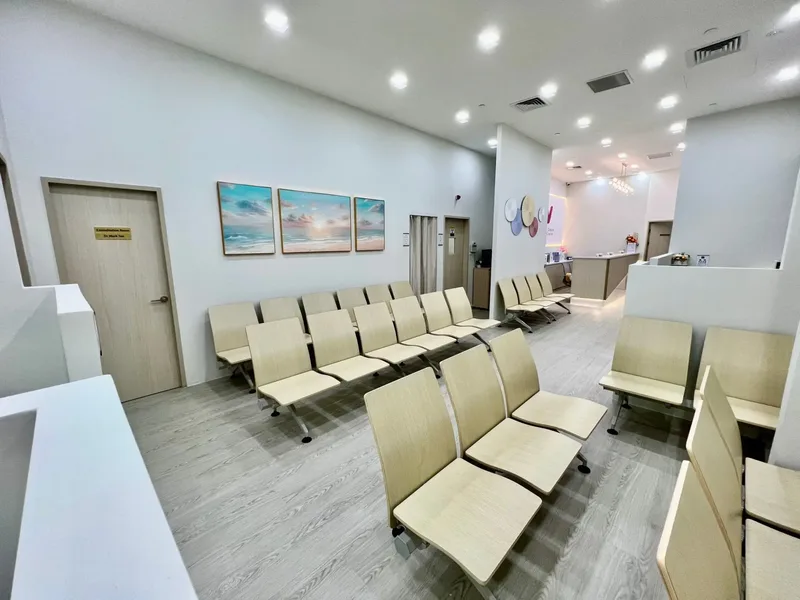
Our dedicated healthcare team focuses on providing clear guidance, professional care, and a comfortable clinic experience.
Minimum Waiting Time
We prioritise efficient workflows to keep waiting times short while maintaining accuracy and care quality.
Fast Turnaround Time
Medical reports are ready by the next working day, with same-day reporting available for selected cases.
Book Your Visit
Walk-ins welcome up to 30 minutes before closing.
Directions
Located in central Singapore, just a 2-minute walk from Clarke Quay MRT.
Mon–Fri before 5/6pm: $2.00 for 1st hr, $1.00 for next subsequent 30min from 7am to 5pm
Mon–Fri after 5/6pm: $3.21/entry from 5pm to 7am the following day
Sat: $2.00 for 1st hr, $1.00 for next subsequent 30min from 7am to 5pm, $3.21/entry from 5pm to 7am the following day
Sun/PH: $3.21/entry from 7am to 7am the following day
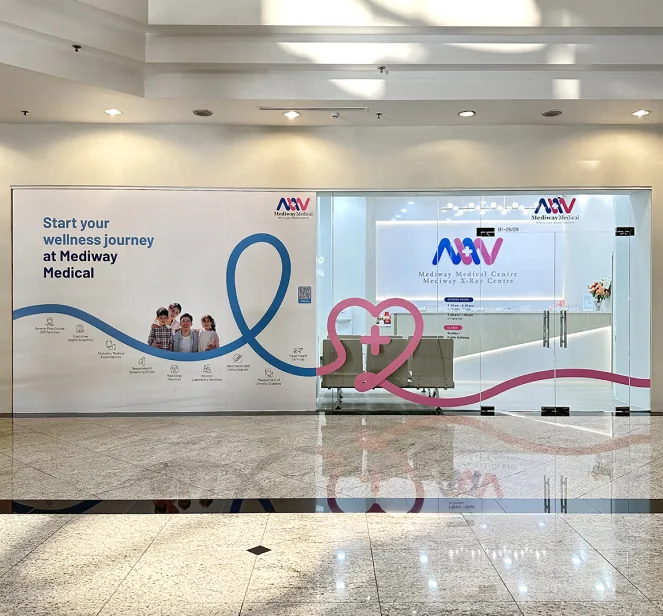
Exit E. 2-minute walk along the river towards The Riverwalk building. We are at #B1-26/29.