
HPV Vaccination in Singapore
Gardasil-9 HPV vaccination at Mediway Medical Centre protects against 9 HPV strains that cause cervical, anal, throat, penile and vulvar cancers, plus genital warts. Available for ages 9 to 45, both males and females. No pre-vaccination tests required. Same-day vaccination after a brief consultation.
 Medically reviewed by Dr. Qiao Yufei, MD · MBBS · Last reviewed 28 April 2026
- VaccineGardasil-99 HPV strains covered
- Per dose$330Single dose price
- 3-dose course$900Ages 15-45 (bundle)
- 2-dose course$620Ages 9-14 (bundle)
- Consultation$38 (first visit)Dose 2/3 no consult fee
- WhoAges 9-45Male + female
- ConsultBrief doctor visit, first time only
- Dose 1Same day as consult
- Dose 2Month 2 (ages 15-45) or Month 6 (ages 9-14)
- Dose 3Month 6 · ages 15-45 only
Ages 9-14 need only 2 doses ($620 bundle) · Ages 15-45 = 3 doses ($900 bundle)From $330
What is Gardasil-9?
Gardasil-9 is the current standard HPV vaccine, manufactured by Merck. It protects against 9 HPV strains:
Together these 9 strains cause around 90% of all HPV-related cancers (cervical, anal, throat, penile, vulvar) and the vast majority of genital warts. HSA-approved for ages 9 to 45 in Singapore, for both males and females.
For broader context on HPV (transmission, cancer links, screening), see our HPV guide.
Who should get HPV vaccination?
HSA-approved in Singapore for anyone aged 9 to 45, male or female. Most effective before sexual debut but still beneficial at any age within the approved range.
- 2 doses
Children and pre-teens (9-14)
Most effective age group. Get 2 doses. National HPV programme target. Both boys and girls should be vaccinated.
- 3 doses
Teens and young adults (15-26)
Need 3 doses for full protection. Still highly effective even if sexually active.
Adults 27-45
HSA-approved catch-up range. Worth doing even with prior exposure. You've likely not encountered all 9 strains.
Men
Prevents anal, throat, and penile cancers. Reduces transmission to partners. Same price, same schedule.
MSM and HIV-positive patients
Higher anal-cancer risk. Vaccination strongly recommended up to age 45.
Immunocompromised patients
May need the 3-dose schedule even under age 15. Discuss at consultation.
Dose schedules by age
Gardasil-9 protection requires the correct number of doses based on your age at first dose.
Ages 9-14
2 doses$620Bundle price for full 2-dose course (save $40 vs per-dose)
- 1Dose 1 at first visit
- 2Dose 2 at 6-12 months later
- Younger immune systems respond strongly, so 2 doses are sufficient
- Most cost-effective age range to vaccinate
Ages 15-26
3 doses$900Bundle price for full 3-dose course (save $90 vs per-dose)
- 1Dose 1 at first visit
- 2Dose 2 at 2 months
- 3Dose 3 at 6 months from first dose
- Standard catch-up for teens and young adults
Ages 27-45
3 doses$900Bundle price for full 3-dose course (save $90 vs per-dose)
- Same 0, 2, 6 month schedule as 15-26
- FDA/HSA-approved adult catch-up range
- Still beneficial even if previously sexually active
- Vaccine covers strains you likely haven't encountered
Single doses outside a bundle are charged at $330 each. Bundles include all doses paid upfront with a small discount.
Pricing and what's included
Transparent pricing. Consultation fee applies only on the first visit; subsequent dose visits are just the vaccine price.
- Gardasil-9 single dose$330
- 3-dose bundle (ages 15-45)$900 (save $90)
- 2-dose bundle (ages 9-14)$620 (save $40)
- Initial consultation (first visit only)$38
- Dose 2 / Dose 3 visits (no consult needed)Vaccine price only
All prices inclusive of GST. Example total 3-dose course: $38 first-visit consult + $900 bundle = $938. 2-dose course for under-15s: $38 + $620 = $658.
No pre-vaccination tests required. The consultation covers medical history, pregnancy status (vaccine not given during pregnancy), allergies, and prior vaccination record. We then administer the vaccine the same visit.
What to expect at your visit
-
Check in
Basement level, The Riverwalk. Private reception. Bring photo ID and any prior vaccination records.
-
Brief consultation
$38 first visit only. Medical history, pregnancy status, allergies, prior vaccinations reviewed.
-
Vaccination
Upper-arm injection. Takes about 30 seconds. We observe you briefly after for any immediate reaction.
-
Schedule next dose
Book dose 2 (6-12 months for under-15s, 2 months for 15+). Calendar reminder via WhatsApp if preferred.
Total visit time: typically 20-30 minutes including the brief post-vaccination observation.
Side effects and safety
Gardasil-9 has been used globally since 2014 (original Gardasil since 2006) with extensive safety data across hundreds of millions of doses administered.
Common mild side effects
- Injection-site pain, redness, or swelling (most common)
- Mild headache or fatigue for 1-2 days
- Mild fever
- Muscle aches
Most side effects improve within 24-48 hours. Simple painkillers (paracetamol) usually suffice.
Rare serious reactions
Severe allergic reactions are very rare but possible. We observe you for 15 minutes after vaccination. Inform us if you have a history of severe allergies (especially to yeast, latex, or prior vaccine reactions) at consultation.
When NOT to vaccinate
- During pregnancy (safe pre-conception and post-partum, including breastfeeding)
- If you have a moderate or severe acute illness (defer until recovered)
- Previous severe allergic reaction to a Gardasil dose or any component
Your privacy, fully protected
HPV vaccination records are medical records. Privacy protections apply.
Discreet clinic location
Basement level of The Riverwalk, inside a shared medical floor.
No records shared by default
Vaccination records are not shared with MOH, insurers, or employers unless you request it (e.g. for school or travel documentation).
Self-pay option
Pay privately to keep the visit entirely outside insurance systems.
Digital reminders
Next-dose reminders via phone, WhatsApp, or email, whichever you prefer.
PDPA-compliant handling
Data managed per Singapore's Personal Data Protection Act. See our full Privacy Policy.
Frequently asked questions
01How much does HPV vaccination cost at Mediway?
Gardasil-9 is $330 per dose. Ages 15-45 bundle (3 doses) is $900. Ages 9-14 bundle (2 doses) is $620. A $38 initial consultation applies on first visit; subsequent dose visits are just the vaccine price (no consult fee). Total 3-dose course with bundle: $938.
02Who should get the HPV vaccine?
Everyone aged 9-45. Most effective before sexual debut. Ages 9-14 get 2 doses; ages 15-45 get 3 doses. Both males and females benefit. HPV causes cervical, anal, throat, penile, and vulvar cancers.
03What's the difference between 2-dose and 3-dose schedules?
Ages 9-14 need only 2 doses, given 6-12 months apart, because the younger immune system responds strongly. Ages 15 and up need 3 doses at 0, 2, and 6 months for full protection.
04Do I need tests before HPV vaccination?
No pre-vaccination tests required. A brief consultation covers medical history, pregnancy status, allergies, and prior vaccination record. We then administer the vaccine the same visit.
05Can men get HPV vaccination at Mediway?
Yes. Men aged 9-45 benefit from HPV vaccination. It prevents anal, throat, and penile cancers, and reduces transmission to partners. Same pricing as for women.
06What are the side effects?
Most common: mild injection-site pain, redness, or swelling. Some people experience mild fatigue, headache, or muscle aches for 1-2 days. Severe reactions are rare. We observe you briefly after vaccination before you leave.
07Can I still get vaccinated if I'm over 45?
HSA-approved Gardasil-9 use in Singapore is for ages 9-45. Above 45, benefit data is less robust but vaccination is still possible on an individual clinical-judgement basis. Discuss with our doctor at consultation.
08If I already have HPV, is the vaccine still worth it?
Yes. Gardasil-9 covers 9 strains, and it is unlikely you've encountered all of them. Vaccination protects against the strains you haven't yet been exposed to.
Book HPV Vaccination
Located at The Riverwalk, a 2-minute walk from Clarke Quay MRT (Exit E). Same-day slots usually available.
- 20 Upper Circular Rd, #B1-26/29 The Riverwalk, Singapore 058416
- Clarke Quay MRT (NE5), Exit E · 2-minute walk
- Hours: Mon to Fri 7:30am to 6pm · Sat 7:30am to 1pm
Directions
Located in central Singapore, just a 2-minute walk from Clarke Quay MRT.
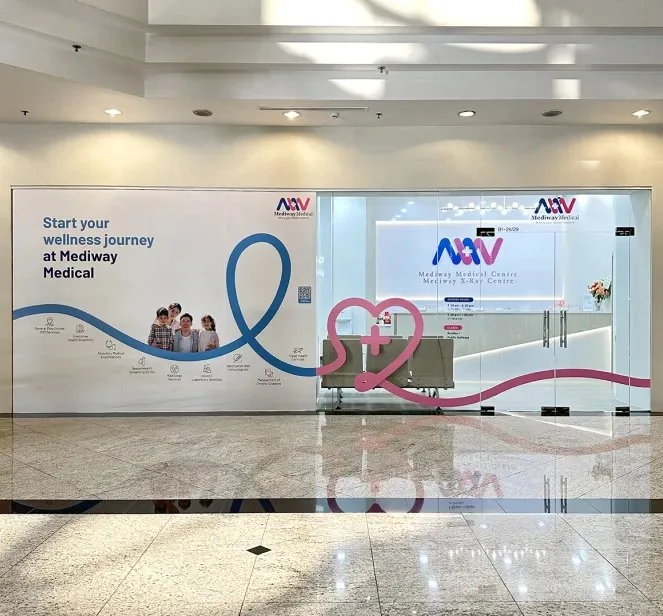
Clarke Quay Station (NE5)
Exit E. 2-minute walk along the river towards The Riverwalk building. We are at #B1-26/29.
Opp Clarke Quay Station (B04239)
Bus No: 2, 12, 33, 54, 147, 190, 12E, TS3, 147A
Clarke Quay Station Exit E (B04222)
Bus No: NS1, NS2, 2, 2A, 12, 12E, 33, 51, 54, 61, 63, 80, 124, 145, 147, 166, 174, 174E, 190, 197, 851, 851E, 961, 961M
Opp High Street Centre (B04251)
Bus No: 32, 195, 195A
Boat Quay (B05029)
Bus No: NS1, NS2, 51, 61, 63, 63A, 80, 124, 145, 166, 174, 174E, 197, 851, 851E, 961, 961M
The Riverwalk Carpark
Mon–Fri before 5/6pm: $2.00 for 1st hr, $1.00 for next subsequent 30min from 7am to 5pm
Mon–Fri after 5/6pm: $3.21/entry from 5pm to 7am the following day
Sat: $2.00 for 1st hr, $1.00 for next subsequent 30min from 7am to 5pm, $3.21/entry from 5pm to 7am the following day
Sun/PH: $3.21/entry from 7am to 7am the following day